


 English
 Ελληνικά

For many of us, work can become our number one priority. Unfortunately, that may happen at the cost of everything else. We want to succeed professionally, but when that becomes a primary focus, we may begin to lose sight of other priorities such as our health and our personal relationships.
Source: Upwork
What is work-life balance?

Work-life balance can be hard to define. In an ideal world, it’s a state of equilibrium between a person’s professional and personal priorities. It’s also prioritizing your work time equally as much as time for your family, well-being, interests, health, and relationships.
What this balance looks like in reality is different from person to person. A good work-life balance simply means you have harmony in different areas of your life.
10 tips for improving your work-life balance
Doing everything on this list is a Herculean task. Don’t let any overachiever tendencies put even more pressure on you to seek perfection in work-life balance. Instead, work on incremental improvements. Every step you make toward better balance is a step in the right direction.
Pro tip: Don’t expect to be able to do all this at once!
1. Accept that it won’t be perfect
First things first, accept that your work-life balance won’t always be perfect. Remember, creating the perfect balance for your personal needs may not happen overnight. In fact, pursuing this complex goal is a work in progress for most people. Give yourself grace as you figure out what balance looks like for you and how you can get closer to achieving it in your personal and work life.
2. Set your priotities

“The key is not to prioritize what’s on your schedule, but to schedule your priorities.”
– Stephen Covey
Start by making a list of your daily priorities—apart from work, of course. This also doesn’t mean making a list of chores you have to do at home. Often we prioritize our work and household chores, and then find ourselves with precious little time to do any of the things we actually enjoy doing. Think what you would like to include in each day. This could include family time, exercise, hobbies, good sleep, and anything else that matters to you. It’s time to start making time for these things. This way, you can make sure your work (and chores) gets done, but you also won’t lose sight of other aspects that make you feel balanced.
3. Play to your strengths and delegate other work

You don’t have to do it all. Really! Whether you’re a solopreneur or a manager, learn to do what you’re good at and delegate where you can.Focus your attention on your strengths and delegate the remaining work to an expert. This also applies to your personal life. If you’re a parent working from home with your kids around, you don’t have to try to be the perfect worker and parent at the same time. Delegate the tasks you can.
4. Learn to say “no”

If you’re a people pleaser—like many of us are—you may find setting boundaries and saying no to something challenging, even uncomfortable. Declining a request for help can be especially hard if you feel like you may be letting your boss, colleague, or even a family member down.
However, if you genuinely want to create a more balanced lifestyle, you have to start making the most of the power of “no.” Every time you say yes to extra work, you’re likely saying no to family time. Conversely, every time you’re saying yes to a family member dropping in during work hours, you’re saying no to the most productive workday.
5. Focus on achieving results
People are action-oriented creatures. You may get a false productivity high just because you’ve done a billion different things today. But how much of that work actually matters? Instead of focusing your energy on doing as much as you can every day, shift to focusing on valuable results. It’s not about working harder; it’s about doing work that creates maximum impact. This ties back to setting priorities.
6. Set your working hours and stick to them

Setting boundaries also means setting and communicating fixed work hours. This is especially important when you’re working remotely from home or if you’re a freelancer. It’s so easy just to work every waking hour when your computer is literally an arm’s length away. Having set hours will help you switch off at the end of the day. When you stick to those hours, any time outside of that is your personal time.
7. Schedule personal time in your calendar
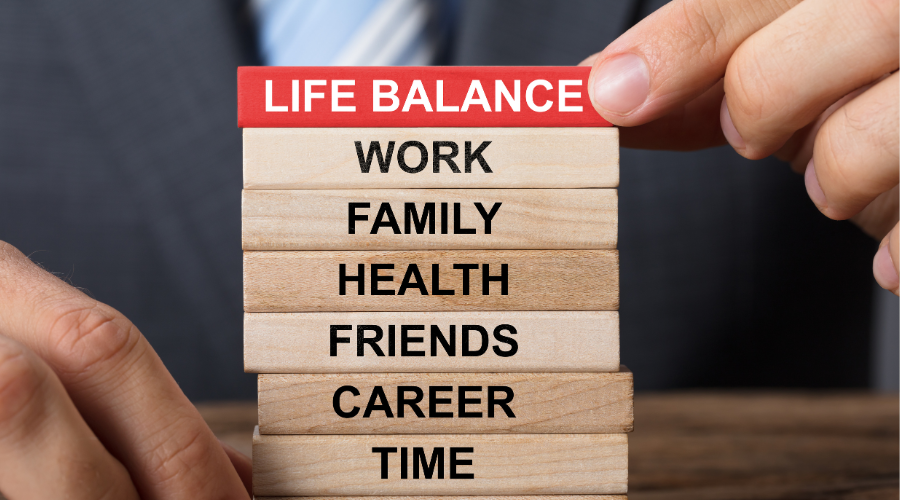
Most of us have good intentions when it comes to our personal lives. We want to take more breaks, spend more time with our families, and maybe even pursue a hobby. But the reality is, we get caught up in work, and all those good intentions go out the window. One way to prevent this is by firmly planning and scheduling personal time into your calendar. What are your daily “must-dos”? Think about how you’re going to fit these into your day.
8. Prioritize your physical and mental health
Make your health a priority. Start with something as simple as a daily walk or making the time to meditate. Set a timer to remind yourself to get up from your desk for a few minutes every hour.
Do whatever you need to do to suit your individual health needs. Eat healthy meals. Get enough sleep. Take a mental health day every once in a while. Don’t be afraid to call in sick on days you’re feeling rough. Being healthy will help you show up better at work and in your personal life.
9. Take vacations

The truth is vacations are important. They help us to refresh our minds, recharge our batteries, and come back with renewed energy and focus. A vacation doesn’t have to mean an expensive trip away. You can take a short staycation at home—as long as you promise to switch off! Taking a vacation will help you decompress and come back to work feeling mentally and physically recharged.
10. Don’t be afraid to unplug
Unplugging yourself every once in a while can help you reset. This important break allows your mind to stop being in a constant “doing” mode. Switch off from the daily stress and the constant barrage of notifications to allow space for creativity and ideas.